Licensed in Connecticut · Independent, multiple carriers · 5.0 on Google
High-Value Home Insurance in Connecticut
High value home insurance in Connecticut: when a standard policy stops being enough
At some point a household’s insurance needs change shape. The house costs more to rebuild than a standard carrier’s form is built for. There is jewelry that a standard policy covers for theft only up to a small cap, often $1,500 in total, or art and collections it was never designed to value. There is a second home, a boat, a teenage driver and enough in savings that a liability judgment would be catastrophic. That is the point where private client insurance makes sense. High value home insurance in Connecticut is a different product, not just a bigger version of the same one, and it is written by a different set of carriers.
The Beam Agency works with families in Farmington, Avon, Simsbury, West Hartford and Glastonbury who have reached that point.
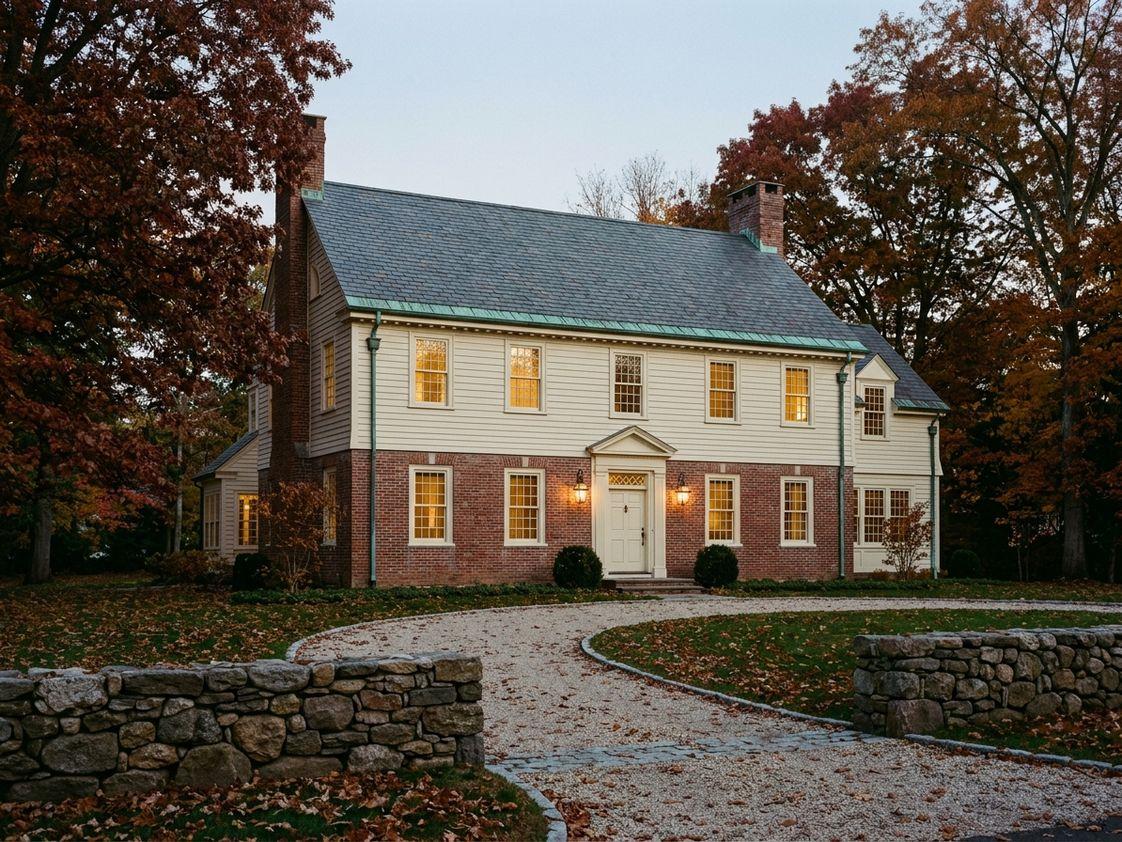
What private client coverage does differently
High-value homeowners
A standard policy settles a total loss at replacement cost only if you rebuild, and it limits code upgrades, landscaping and other structures to a small percentage of the dwelling limit. Private client policies typically add extended replacement cost, which pays a set percentage above your dwelling limit if rebuilding costs more than expected, and some carriers offer guaranteed replacement cost. Most give you the option of a cash settlement after a total loss if you decide not to rebuild. They also usually include water backup coverage and higher limits for landscaping, other structures, loss of use and ordinance or law upgrades. Neither extended nor guaranteed replacement cost fixes a house that was underinsured to begin with, which is why the dwelling limit comes first (below).
Mold is one place to read the fine print: Connecticut lets a standard policy cap mold remediation at as little as $10,000 when the cause is something other than fire or lightning.
Valuable articles
Jewelry, watches, fine art, wine, instruments and collectibles, scheduled at an agreed value on most private-client forms, usually with no deductible and covered for more causes of loss, including simply losing them, and worldwide for most items (some forms limit fine art to the U.S. and Canada). A standard homeowners form caps jewelry theft at a small total, often $1,500, and pays depreciated value for belongings unless replacement cost has been added. Some standard scheduling endorsements pay the lower of the scheduled amount or the cost to replace, so it matters which you have. Expect the carrier to ask for a professional appraisal, and have valuable pieces reappraised every few years or when the carrier asks.
Excess liability
Umbrella limits of $5 million, $10 million or more, sized to what a judgment could reach: your net worth, your future earnings, and the exposures your household actually has, such as teenage drivers, a pool, a boat, household staff or board service. Private client umbrellas typically pay defense costs in addition to the limit, and cover personal injury claims like libel and slander and unpaid service on non-profit and community-association boards. Connecticut does not require an umbrella to include uninsured and underinsured motorist coverage, so we ask about adding excess UM/UIM: it protects you when the other driver can’t pay. More on umbrella insurance in Connecticut.
Household staff
If you employ a nanny, housekeeper, caretaker or other household worker who regularly works more than 26 hours a week for you, Connecticut’s Workers’ Compensation Act covers them, and you need a workers’ compensation policy for them. Your homeowners policy won’t fill that gap, because it excludes injuries to anyone eligible for workers’ comp. Private client umbrellas typically also cover, as excess, staff injuries that workers’ comp doesn’t pay, and employment practices coverage is often available separately.
Second homes, boats and collector vehicles
A shoreline house in Madison, a lake house in Litchfield County, a classic car, a boat with a real engine on it. Private client carriers can often write these together on one account, with one agent and, in many cases, one renewal date.
Connecticut points that matter more on an expensive home
- The hurricane deductible is the number to look at. It is a percentage of the dwelling limit, and Insurance Department guidelines cap it at 5% for homes within 2,600 feet of the coast and 2% farther inland. On a house insured for $2 million, that is up to $100,000 near the shore, or $40,000 inland, before the policy pays a hurricane claim. It applies only to a real hurricane: a warning for Connecticut plus sustained winds of 74 mph or more somewhere in the state.
- Matching materials. If part of your home is damaged and the replacement materials won’t match what’s left, Connecticut requires insurers to replace the adjacent items too, inside or out, so the result looks reasonably uniform: a run of slate, a stretch of millwork, a hardwood floor.
- Non-renewal notice. Insurers must give at least 60 days’ written notice, with a reason, before non-renewing a homeowners policy. The Insurance Department has said that distance from the coast alone isn’t a lawful reason to drop a policy, and neither are cosmetic roof stains seen in aerial photos.
- The state’s insurer of last resort isn’t built for this. The CT FAIR Plan insures a dwelling for at most $350,000, at actual cash value rather than replacement cost, against a short list of named perils that leaves out theft and water damage. Its coastal program, for homes within 2,600 feet of the shore, goes up to $500,000 on the building with a 5% hurricane deductible. For a house that costs more than that to rebuild, the realistic options are the private client market or, if needed, a surplus lines policy, and the second deserves a careful read first.
What we check first
Three things, in order.
- Whether the dwelling limit reflects what a builder in the Farmington Valley would charge to rebuild the house today, including the custom millwork and the slate roof. The limit isn’t what the house would sell for: market value includes the land, the school district and the housing market, and rebuilding cost includes none of that. An older home with plaster walls or a slate roof can cost more to rebuild than it would sell for. It matters because a standard policy penalises underinsurance: below 80% of the full rebuilding cost, even a partial claim is paid in proportion, not in full. Rebuilding costs are still rising: Verisk’s data show Connecticut residential reconstruction costs up roughly 2.4% to 3.2% in the year to July 2026, mostly from labor.
- Whether the jewelry, art and collections are scheduled or sitting under a small cap.
- Whether the umbrella is sized to the net worth it protects, with underlying auto and home limits that satisfy the umbrella carrier.
First reviews often find at least one of the three is off.
Who this is for
It is not about a specific income. It is about whether a loss would be handled correctly. Households that usually belong here have some combination of a home that would cost roughly $1 million or more to rebuild, more than $50,000 in jewelry or collections, multiple properties, or a net worth that makes a $1 million umbrella feel thin. Eligibility for private client carriers is usually set by rebuilding cost, not market value.
A note on carrier access
Private client carriers are selective, and an agency has to be appointed with each one. We place high-value coverage with Travelers and through other markets, and we are building out additional private client appointments. We’ll tell you which markets we can reach for your situation. If the right fit is a surplus lines (non-admitted) carrier, we’ll explain how that differs from a standard Connecticut policy before you decide, and if your situation calls for a carrier we don’t represent, we’ll tell you that instead of forcing a fit.
How we approach it
We start with a conversation about what you own, what would be hardest to replace, and what you are worried about. Then we review the current policies against that. The common findings are a dwelling limit that has not kept up with construction costs in the Farmington Valley, jewelry sitting under a small cap, and an umbrella that is smaller than the net worth it is protecting.
Talk to Brandon about private client coverage
Tell us roughly what you are looking to protect and what you are worried about, and Brandon will set up a conversation. No obligation.
High-value home insurance questions
What counts as a high-value home in Connecticut?
There’s no single line, and carriers set their own. Most private client carriers look at what the house would cost to rebuild rather than what it would sell for, and households usually belong in this market when that figure is roughly $1 million or more, or when jewelry, collections, multiple properties or net worth have outgrown a standard policy.
Is my home insured for its market value?
It shouldn’t be. The dwelling limit should be the cost to rebuild the house today with similar materials and workmanship, which excludes the land and can be higher or lower than the sale price. In the Farmington Valley, older homes with custom millwork or slate roofs often cost more to rebuild than people expect.
How is jewelry covered on a homeowners policy?
A standard policy caps theft of all your jewelry, watches and furs together at a small amount, often $1,500. Scheduling a piece lists it with its own value, usually with no deductible and coverage for more causes of loss, including losing it. Most private client forms pay an agreed value in full on a total loss.
Do I need workers’ comp for my nanny or housekeeper in Connecticut?
If they regularly work more than 26 hours a week for you, yes: Connecticut’s Workers’ Compensation Act covers them, and your homeowners policy excludes injuries to anyone eligible for workers’ comp. Below that, a work injury would usually fall to your homeowners and umbrella liability.
What is the hurricane deductible on a high-value home?
A percentage of the dwelling limit, capped by Insurance Department guidelines at 5% within 2,600 feet of the coast and 2% inland. On a $2 million dwelling limit that can mean $100,000 or $40,000. It applies only when there’s a hurricane warning for Connecticut and sustained winds of at least 74 mph in the state.
Independent agent, direct line
Talk to Brandon directly
One agent, multiple carriers, and a policy read line by line before you sign it.